Spoiler note: The section covering the plot’s turning points is collapsed below. If you haven’t seen the film yet, feel free to skip it.
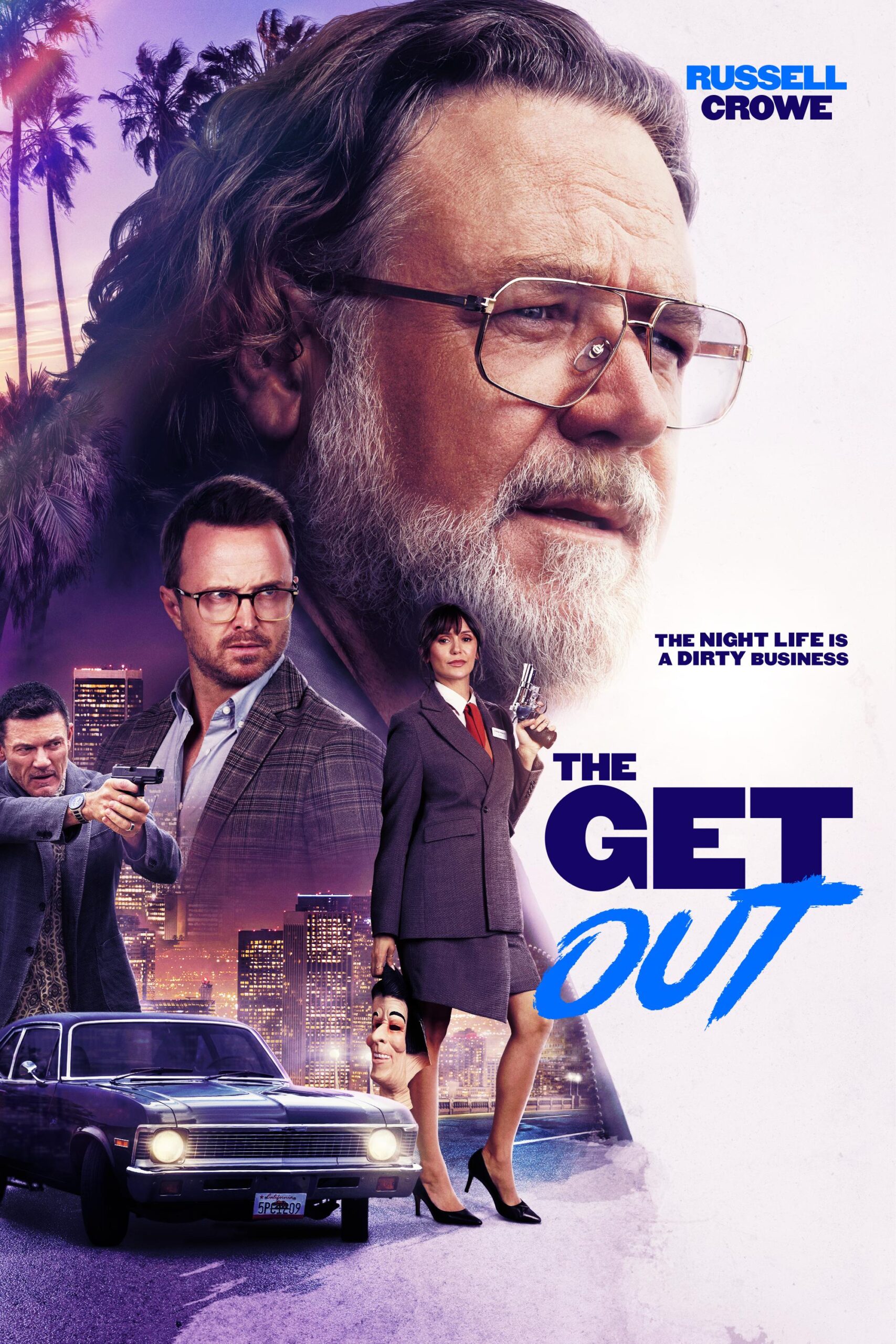
Some films build expectations through their cast alone. The Get Out, bringing together Russell Crowe, Aaron Paul, Luke Evans and Teresa Palmer, was one of those for me. A story about nightclubs, dirty money, robberies and a man trying to get out of the crime world promises a lively watch. The film does deliver that energy, but it didn’t leave me with anything I’d keep thinking about afterwards.
Credits
Original title The Get Out
Year / Country 2026 · USA, Australia
Director Derrick Borte
Screenplay Derrick Borte, Daniel Forte (from Thomas Perry’s novel Strip)
Cast Russell Crowe, Aaron Paul, Luke Evans, Teresa Palmer, Nina Dobrev
Genre Crime, action, thriller
Runtime 111 minutes
Russell Crowe’s Manco Kapak is a nightclub owner who came to America from Albania and built himself a wealthy life. He has a beautiful house, a young girlfriend and a business that looks successful from the outside. Behind that life, though, is the money laundering he runs for a crime cartel. The story of the immigrant who comes to America and rises thus gets tied to a familiar crime narrative.
There’s a tension in that opening that interested me. Manco has reached a certain comfort, yet he doesn’t seem able to rest inside the setup he’s built. The pace of nightlife, the constant flow of money and the expectations of the people he works with all put pressure on him. The harder he tries to protect what he has, the harder it becomes to get out of that life.
The film’s pink, neon-heavy look reminded me of the crime-and-fun atmosphere of the GTA games. Clubs, women, drugs, money and showing off are presented as parts of the same world. That’s less a claim of influence than a visual association the film sparked for me: an easily recognizable pop-culture crime universe where dangerous relationships move beneath shiny surfaces.
For me, that atmosphere gradually took over from the story. The film presents familiar elements in an eye-catching package. But when I got closer to the characters’ lives and choices, I didn’t find a story as different as that package promises. The club boss, the cartel’s money, the robbers and the mysterious buyer all come together. The events multiply, but my connection with the characters doesn’t grow at the same rate.
Spoilers ahead · click to open
Manco’s health crisis is one of the places where the film could have gone deeper. His stressful working life and his effort to keep up his sexual performance bring him up against the limits of his body. As he tries to keep up the life he’s built with his young girlfriend Sunny, the cost of never making time for himself becomes visible. In this part, I thought about how money and status can’t stop aging or exhaustion.
Crowe’s physical presence plays into that impression too. There’s no air of an action hero who can overcome every problem by force. We see a tired man, stuck in his habits, trying to keep his setup going. There’s ground here for an interesting character study about aging, masculinity and losing control. I felt the film didn’t stay on that ground for long. The health crisis mostly triggers thoughts of selling up and getting away, and then the crime plot takes over again.
Manco getting robbed while taking the cartel’s money to the bank is the story’s main turning point. He can cover the first loss from his own savings. But when the same person turns up a second time, it becomes about more than money. He needs to keep his credibility in the cartel’s eyes. The loss also damages the image of a man who has his business and his life under control.
I expected that repetition to build a growing sense of being trapped. Instead, the film chooses to expand with new characters and side events. Aaron Paul’s Jeff, Teresa Palmer’s Sunny and Luke Evans’ mysterious buyer each carry a different side of the mess. The cast helps keep things interesting. Still, bringing these characters together in one story didn’t create a cohesive, strong tension for me.
Other reviews make similar points. At RogerEbert.com, Peter Sobczynski says the film has a strong cast and an intriguing enough setup, but its side stories never come together into a satisfying whole, and he finds the mix of humor and dark crime elements rough. In particular, the lack of any real sense that Manco is in danger explains the tension I kept looking for throughout.
At Variety, Elena Lazic feels the film doesn’t make enough of the thematic possibilities the crime-comedy genre offers. She notes that humor built on characters trying to resemble familiar crime-movie types sometimes makes the film’s own shortcomings more visible. That’s close to the clichéd world I saw.
Still, it wouldn’t be fair to ignore the film’s nods to cinema entirely. Nina Dobrev’s character’s love of Point Break is used openly, and critics also link the film to Elmore Leonard adaptations and crime comedies like Jackie Brown. For me, though, those references didn’t noticeably enrich the experience. There was a gap between spotting the reference and seeing it pay off in the story.
Those who rate the film more highly are simply more comfortable with the same surface-level quality. At Radio Times, Rosie Fletcher finds the script weak and the story derivative, yet still sees it as a fun watch thanks to Crowe’s performance, the humor and the glossy presentation. I can understand that view. What I was hoping for, beyond the cast and the visual energy, was more back from the characters.
The Get Out stays with me as a film that assembles familiar pop-culture crime imagery. Neon lights, clubs, money and an ever-growing mess fill the running time. But Manco’s past, his body’s exhaustion and his wish to get away from the life he built never go as deep as I’d hoped.
After it ended, that possibility is what I thought about most. A man realizing that the life he thought he’d built is now consuming him could have been a powerful story. The Get Out touches that conflict, then moves on to the next robbery and the next mess. That is exactly the gap it left me with.
What worked for me
- An appealing cast in Crowe, Paul, Evans and Palmer
- A striking pink-and-neon visual world
- Crowe’s portrait of a tired man stuck in his routine, and the theme of aging
What didn’t
- Atmosphere gradually taking over from the story
- A connection with the characters that never forms
- Strong themes like the health crisis left on the surface
- Side stories that never add up to cohesive tension
Added after the review was published.